What is the best way to upgrade DC charging stations as electric vehicle demand accelerates? The answer is rarely a simple power increase. The International Energy Agency’s Global EV Outlook 2024 reported more than four million public charging points worldwide at the end of 2023. Public charging networks grew by over 40% that year, while fast-charging demand continued rising. These figures show the pressure on older sites. They also reveal a practical issue: many stations need better availability, not merely higher rated output.
A professional upgrade begins with a site audit. Engineers should inspect switchgear, transformers, cables, cooling systems, payment hardware, and network connectivity. The U.S. Department of Energy’s Alternative Fuels Data Center highlights uptime, connector compatibility, and transparent station information as important user factors. A 150 kW charger may still perform poorly if its cable overheats or the local transformer reaches its limit. Small details matter. A damaged connector can stop a journey.
The central question is “How to upgrade existing DC charging stations” without creating new operational weaknesses. Modular power cabinets, liquid-cooled cables, load management, and remote diagnostics can improve capacity while reducing unnecessary construction. Hardware should support widely adopted standards, secure software updates, and reliable payment systems. The Joint Office of Energy and Transportation also emphasizes dependable uptime and accessible charging in its national deployment guidance. However, no upgrade plan is perfect. Traffic patterns change, batteries improve, and predicted demand may disappoint. This article examines practical upgrade paths, lifecycle costs, safety checks, and measurable performance targets. The best solution is often the one that works consistently at 2 p.m. on a busy holiday, not the one with the largest number on its specification sheet.
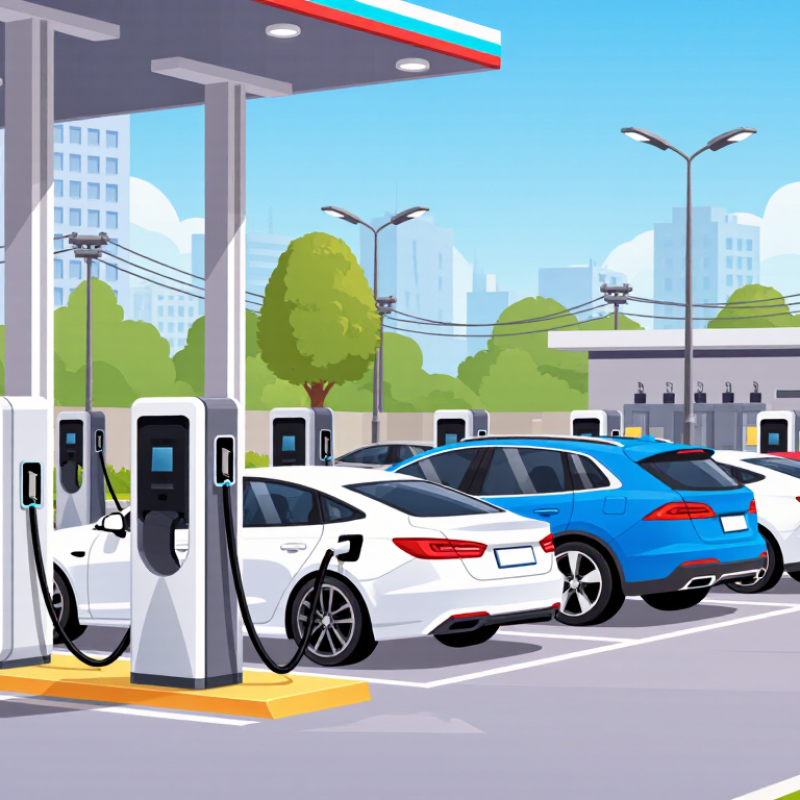
What Is the Best Way to Upgrade DC Charging Stations?
Upgrade decisions should begin with actual demand, not headline charging speed. The International Energy Agency reported more than four million public charging points worldwide at the end of 2023. However, availability does not prove strong utilization. A 150 kW charger may serve evening commuters well, while a 350 kW unit may sit idle near a low-traffic route. Review hourly sessions, average energy delivered, peak occupancy, dwell time, and vehicle battery limits. A 350 kW rating means little when most vehicles cannot accept that power for long.
Grid capacity must be assessed beside traffic demand. The U.S. Department of Energy notes that DC fast chargers commonly range from 50 kW to 350 kW. At a six-charger site, simultaneous 350 kW operation could require 2.1 MW before site loads and conversion losses. That figure can exceed the available transformer capacity. NREL’s Electric Vehicle Infrastructure Projection Tool also stresses location-specific demand and electrical constraints. A phased upgrade may therefore be safer: install conduits and switchgear for future growth, then add high-power chargers as utilization rises.
The numbers still need skepticism. Forecasts can overestimate highway traffic, while short pilots can miss seasonal peaks. A practical review should compare weekday and weekend load curves for at least several months. It should also test managed charging, battery storage, and queue limits against utility tariffs. Sometimes, eight well-used 150 kW ports outperform four 350 kW ports. That is not a universal rule. It is a reminder that capacity without utilization can become expensive concrete.
Select hardware rated from 400 to 1000 volts. Modern EV battery architectures increasingly use 800-volt systems, while many existing vehicles still operate near 400 volts. A wider voltage range supports both groups and reduces premature replacement. According to the IEA’s Global EV Outlook 2024, more than four million public charging points existed worldwide at the end of 2023. Public charging additions exceeded 1.3 million that year. This growth makes compatibility more important than peak power alone.
In field upgrades, check cable cooling, connector temperature, and voltage stability under continuous loads. A charger advertised at 350 kW may deliver less power when the battery, cable, or grid connection becomes hot. NREL research highlights the need to assess distribution capacity before installing high-power charging equipment. Modular power cabinets can simplify maintenance and future expansion.
However, modular does not mean effortless. Protection settings, payment systems, communications, and local electrical rules still require careful commissioning. I have seen projects focus on rated output and overlook cable handling. That mistake affects daily driver experience.
Tips: Measure real charging sessions, not only nameplate capacity. Request testing at 400, 800, and 1000 volts. Review thermal derating data. Leave space for additional power modules. Use ISO 15118-ready communication where practical, but verify vehicle compatibility before promising advanced functions. The perfect upgrade may not exist yet. Choose adaptable hardware instead.
Upgrading a DC charging station should begin with interoperability, not higher power alone. ISO 15118 Plug-and-Charge can authenticate drivers automatically through digital certificates. The process removes repeated app logins and reduces payment friction. It also depends on reliable certificate management, backend support, and vehicle compatibility. During testing, engineers should check cable connection, authentication time, charging authorization, and session recovery. Small delays matter.
OCPP 2.0.1 creates a stronger communication layer between chargers and central systems. It supports improved device monitoring, smarter load management, security functions, and clearer transaction data. A practical upgrade should test firmware updates, remote diagnostics, charging profiles, and error reporting. Use real conditions, including weak networks and interrupted charging sessions. Field teams should record connector temperatures, restart behavior, and failed authorizations. Logs reveal problems that dashboards may hide. ISO 15118 and OCPP 2.0.1 must be tested together, not separately. That is where many projects become less certain. Certificate errors can appear even when the charger passes basic tests. Older vehicles may also respond differently. A staged rollout, with rollback procedures and trained support staff, reduces operational risk. Do not assume interoperability after one successful session. Test repeatedly.
ISO 15118 and OCPP 2.0.1 address different layers of the charging ecosystem. The most interoperable upgrade combines both standards: ISO 15118 manages vehicle-to-charger communication and Plug-and-Charge, while OCPP 2.0.1 manages charger-to-backend operations.
The chart shows whether each capability is defined within the primary scope of ISO 15118 or OCPP 2.0.1. A value of 1 means the capability is covered by the standard; 0 means it is outside the standard’s primary scope. Using both standards creates end-to-end interoperability from the vehicle to the charging management system.
Upgrading a DC charging station should begin with safety standards, not higher output. IEC 61851 defines essential control, communication, and protection requirements for conductive charging systems. It helps the charger and vehicle exchange charging limits before current flows. That small conversation prevents serious mistakes.
In the United States, NEC Article 625 guides installation details, including wiring, grounding, disconnects, and overcurrent protection. Local rules and the adopted code edition still matter. A qualified electrical professional should confirm the site conditions before equipment selection. Check available capacity, conductor temperature, fault current, enclosure ratings, and emergency access. Wet locations need suitable protection.
Test every layer.
A practical upgrade includes insulation checks, protective-earth verification, connector inspection, and simulated fault testing. The emergency stop should interrupt charging reliably, not merely illuminate a warning. Communication faults should produce a controlled shutdown. Clear labels and unobstructed cable paths also reduce everyday errors.
Field inspections often reveal overlooked issues. A panel may have spare space but insufficient fault capacity. A cable may reach the vehicle but create a trip hazard. Designs can appear compliant and still fail during maintenance. That is why commissioning records, torque checks, and independent inspection deserve attention. I would also revisit the design after several months of use. Heat, dust, and repeated connector strain can expose weaknesses that calculations miss. Perfect upgrades are uncommon. Careful verification is more realistic.
Validate 97%+ Availability Through Power, Payment, and Thermal Testing
Upgrading a DC charging station should begin with evidence, not simply a faster connector. To validate 97% or higher availability, test the complete operating chain under realistic demand. Measure input voltage stability, peak current, conversion efficiency, and recovery after a power interruption. A clean laboratory result is not enough. Outdoor cabinets face dust, rain, cable strain, and uneven grid conditions. These details expose weaknesses early.
Payment testing must follow the driver’s actual journey. Check authorization, declined transactions, refunds, receipts, and network loss. Use different payment methods and repeat transactions during busy periods. A charger that delivers energy but rejects payment is still unavailable. Log every failed session with timestamps, error codes, and recovery time. This evidence supports maintenance decisions and creates an auditable reliability record. Small delays matter.
Thermal testing deserves equal attention. Run the equipment at high output until temperatures stabilize, then repeat the test in hot and cold conditions. Monitor power modules, connectors, cables, fans, and internal hotspots. Thermal protection should reduce risk without causing confusing, repeated shutdowns. In field work, airflow restrictions are easy to miss. Filters clog. Fans age. Yet 97% availability should be treated as a measured result, not a marketing promise. Review failures monthly, challenge optimistic assumptions, and retest after software or hardware changes. The uncomfortable finding may be the most useful one.
Choose hardware rated from 400 to 1000 volts. It can serve older 400-volt vehicles and newer 800-volt systems. Wider compatibility may delay replacement. Peak power alone is not enough.
Performance can change across voltage levels. Test each range under continuous loads. Record voltage stability, current, charging speed, and thermal behavior. A single successful test proves very little.
No. Heat, battery limits, cable temperature, and grid capacity can reduce output. A 350-kilowatt charger may deliver less during long sessions. Real charging data matters more than the nameplate.
Check cable cooling, connector temperature, cabinet airflow, fans, filters, and cable handling. Rain, dust, and repeated cable strain can expose weak points. Cable handling is easy to overlook.
Modular cabinets can simplify maintenance and add capacity later. Leave physical space for extra power modules. However, protection settings, communications, payment systems, and electrical rules still need careful commissioning.
Test the complete operating chain under realistic demand. Measure input voltage, peak current, conversion efficiency, and recovery after power interruptions. Treat 97% or higher availability as a measured result, not a promise.
Test authorization, declined transactions, refunds, receipts, and network loss. Repeat transactions during busy periods. Log timestamps, error codes, and recovery times. Energy delivery alone does not prove availability.
Run the charger at high output until temperatures stabilize. Repeat testing in hot and cold conditions. Monitor power modules, connectors, cables, fans, and internal hotspots. Heat changes everything.
Use modern vehicle communication readiness where practical. Verify actual vehicle compatibility before promising advanced functions. The perfect upgrade may not exist. Adaptability is safer than confident assumptions.
Upgrading DC charging stations begins with understanding real-world demand. Evaluate utilization of existing 150–350 kW chargers, traffic patterns, future EV adoption, and available grid capacity before selecting new equipment. For long-term compatibility, consider 400–1000 V charging hardware that can support modern EV battery architectures while allowing flexible power management and efficient site expansion. A carefully planned upgrade should also improve user convenience through ISO 15118 Plug-and-Charge and OCPP 2.0.1 interoperability, enabling secure authentication, remote monitoring, smart load control, and smoother communication between vehicles, chargers, and management systems.
When determining how to upgrade existing DC charging stations, safety and reliability must remain central. Apply IEC 61851 and NEC Article 625 requirements to guide electrical protection, installation, grounding, and operational design. Before returning equipment to service, validate performance through comprehensive power delivery, payment, communication, and thermal testing. Maintaining at least 97% availability requires preventive maintenance, dependable connectivity, rapid fault response, and continuous monitoring of critical components. This approach creates a safer, more scalable, and consistently available charging network.

Vernon Charger