Explore our CE-certified power conversion systems, high-voltage transformers, and intelligent fast EV chargers designed for high-density public transit fleets.
The critical role of rapid charging infrastructures in maximizing commercial taxi operational efficiency.
Unlike personal electric vehicles, which spend up to 90% of their operational life parked, commercial taxis must remain operational to maximize profit margins. This economic reality necessitates ultra-fast, highly resilient DC charging infrastructure. A charging event for a taxi fleet driver represents "unpaid downtime." Thus, high-capacity systems capable of delivering up to 150kW or 240kW within a 20-to-30-minute shift handover window are the backbone of modern city transit modernization programs.
Securing CE certification is not merely a regional regulatory check for European markets; it serves as a global benchmark for reliability, electromagnetic compatibility (EMC), and rigorous safety engineering. A CE-certified DC charger guarantees compliance with strict EN standards (such as EN 61851 series), which verify thermal protection, surge mitigation, and strict galvanic isolation. Operators and fleet suppliers globally demand these safety benchmarks to limit liability and secure municipal transit contracts.
Operational dynamics vary by region. European operators rely extensively on CCS2 connectors with advanced dynamic load sharing. In contrast, the APAC region relies heavily on proprietary fast-charging configurations, and South America and standard CCS1/CCS2 hybrids are transitioning to combined systems. Intelligent DC chargers designed for fleets must offer modular liquid or forced-air cooling designs, alongside compliance with multiple communication protocols (OCPP 1.6J/2.0.1) to integrate seamlessly with regional payment and fleet tracking platforms.
How Shenzhen Vernon Charger Co., Ltd. optimizes manufacturing pipelines to offer unmatched value, scale, and customizability.
China is the global center for lithium-ion and charging infrastructure supply chains. Companies like Shenzhen Vernon Charger Co., Ltd. leverage this proximity to raw materials and component manufacturing to offer substantial structural benefits to international distributors and municipal procurement offices:
1. Vertically Integrated Power Module Assembly: By producing and sourcing high-frequency power switching devices (such as Silicon Carbide MOSFETs) within the regional industrial ecosystem of Shenzhen, we minimize transport costs, bypass third-party margins, and ensure superior quality control over critical power stacks.
2. Agility in Prototyping & Customization: Traditional European or North American manufacturing pathways require months to implement housing designs, custom decals, or modified connectors. Our facility streamlines the engineering pathway, reducing lead times for custom-branded, dual-gun commercial configurations to weeks rather than months.
3. Exhaustive Testing Ecosystems: Every DC charger undergoes rigorous Burn-In testing, high-voltage load testing, thermal profiling via infrared imaging, and water/dust resistance testing under real-world conditions. This meticulous assembly pipeline is what ensures our hardware meets the performance benchmarks mandated by EU and international standardizations.
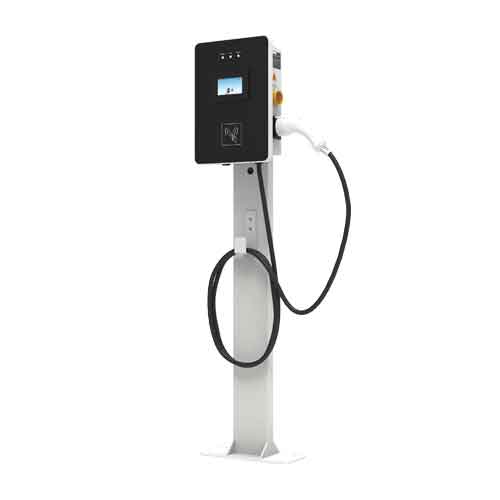
Understanding how our DC fast chargers integrate into specific architectural environments and high-stress scenarios.
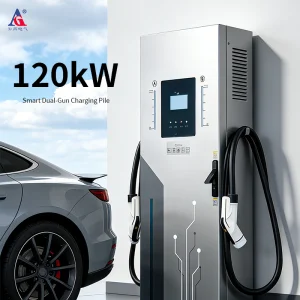
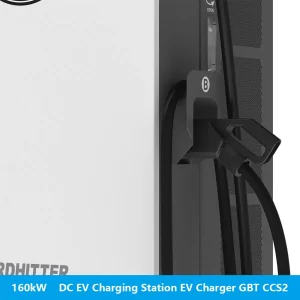
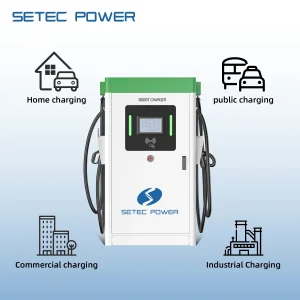
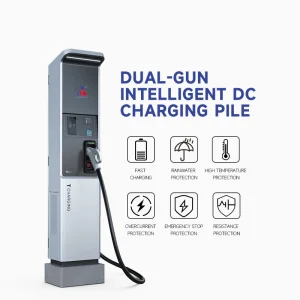
At metropolitan train stations, airports, and dedicated taxi ranks, space is highly constrained, and the throughput requirement is extreme. The deployment of compact, high-power units, such as our 150kW Intelligent DC EV Charger or floor-mounted heavy-duty chargers, allows drivers to top up during passenger loading sequences. Dynamic power allocation systems ensure that if only one gun is in use, the vehicle receives the maximum possible power capacity, decreasing queue congestion.
For fleet managers overseeing shift operations, overnight charging does not necessarily require the highest possible peak power all at once. By using our group-charging systems and advanced Energy Management Systems (EMS), the fleet can balance power draws dynamically, taking advantage of cheaper off-peak electricity tariffs while protecting the local distribution grid from high demand peaks.
As the EV industry matures, taxi charging systems are pivoting toward technologies that extend asset lifespans and lower overall operational expenses (OpEx):
Below is a typical framework outlining standard procurement specifications for our commercial-grade DC Fast Chargers suited for urban taxi fleets:
| Parameter / Metric | Commercial Fleet Specification | Benefit / Operational Value |
|---|---|---|
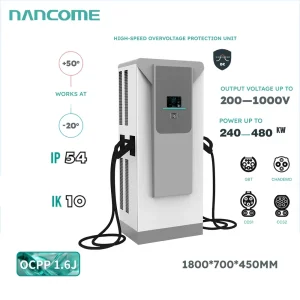
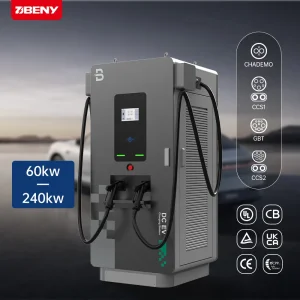
| Nominal Output Power | 60kW to 240kW (Modular configurations) | Adaptable charging velocities depending on depot dwell times |
| Output Voltage Window | 150V DC - 1000V DC (Wide Range) | Universal support for standard 400V and advanced 800V taxi platforms |
| Compliance Certifications | CE, IEC 61851-1, IEC 61851-23, ISO 15118 | Guaranteed safety, electromagnetic safety compliance, and future-proof ISO plug-and-charge functionality |
| Ingress Protection Rating | IP54 / IP55 rated for outdoor deployment | High reliability in adverse weather conditions (rain, dust, snow) |
| Connectivity Protocols | Ethernet, 4G, OCPP 1.6 JSON & OCPP 2.0.1 | Seamless integration with third-party billing, management systems, and smart grid utilities |
| Power Factor Efficiency | ≥ 0.99 at full load output | Minimizes grid transmission losses and reduces electricity costs |
A pioneering force in portable, wall-mounted, and ground-mounted DC charging system development.
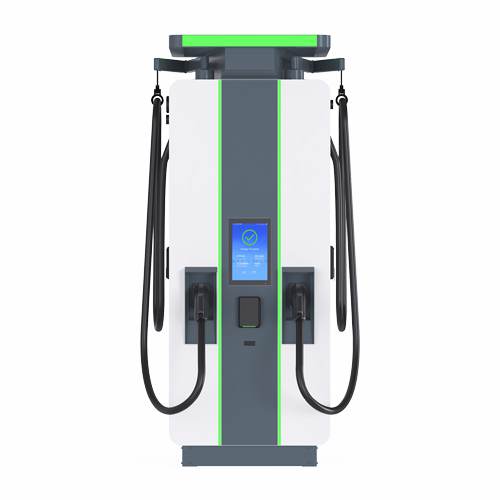
Shenzhen Vernon Charger Co., Ltd. is a specialized, pioneering manufacturer focused on the research, development, and high-volume production of portable, wall-mounted, and ground-mounted DC EV chargers. We deliver comprehensive charging infrastructure solutions designed for smart group charging, fleet systems, and high-demand public transit application scenarios.
Our product portfolio ranges from mobile DC chargers for roadside assistance to high-power, multi-standard DC fast charging stations designed to keep commercial transit systems operating smoothly. Each product integrates advanced features such as intelligent dynamic load management, real-time cloud-based diagnostic monitoring, and system optimization, ensuring safe, efficient, and user-friendly operation.
Commitment to innovation, strict compliance, and environmental stewardship drives us to integrate renewable solar generation, battery storage systems, and smart grid technology. By offering robust and cost-effective DC EV charging solutions, we help global commercial transit operators and distributors transition to cleaner energy systems with confidence.
Expert technical insights regarding our CE-certified charging equipment for taxi fleets.
CE certification demonstrates compliance with strict European health, safety, and environmental protection standards. For high-power DC fast chargers, this involves testing for electromagnetic compatibility (EMC), low voltage directives, and general functional safety. This certification helps ensure the safety of operators, fleet drivers, and the vehicles being charged.
Dynamic power sharing uses internal controller software to measure vehicle demand. For instance, if a 120kW charger is connected to one EV that can accept the full 120kW, the charger allocates all power to that gun. When a second vehicle connects, the system divides the output dynamically (e.g., 60kW+60kW or 80kW+40kW) depending on each vehicle's State of Charge (SoC) and battery capacity. This optimizes charging speeds and helps prevent local grid overloads.
Yes, our entire line of DC chargers is built to comply with Open Charge Point Protocol (OCPP) standards, specifically version 1.6J and the latest 2.0.1. This allows our units to integrate with third-party software platforms for billing, user authorization, remote diagnostics, and energy management.
Depending on the order volume and customization requirements (such as brand identity, custom wraps, specific connector configurations, or internal power module options), standard production times range from 3 to 6 weeks. Our integrated supply chain in Shenzhen allows us to scale manufacturing quickly to meet urgent fleet deployment schedules.
From heavy-duty highway charging stations to compact wall-mounted systems, we provide dependable hardware solutions for fleet managers and public utilities.
 Vernon Charger