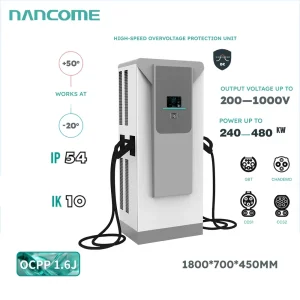
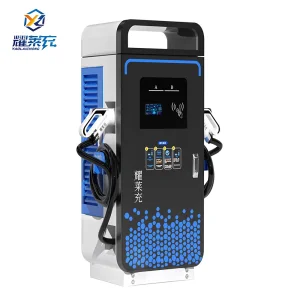
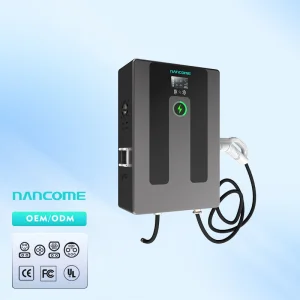
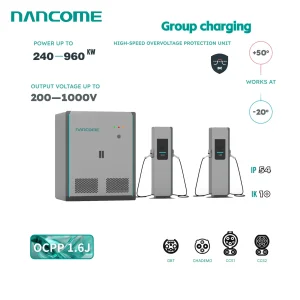
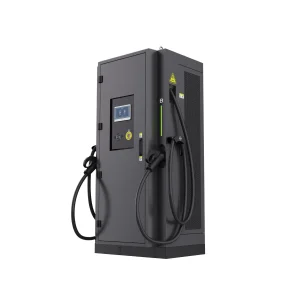
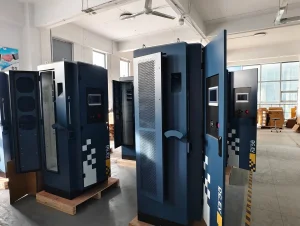
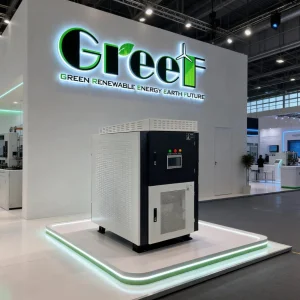
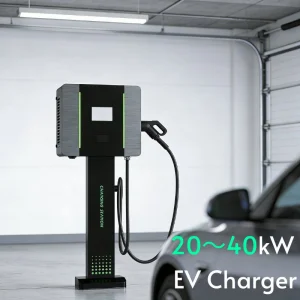
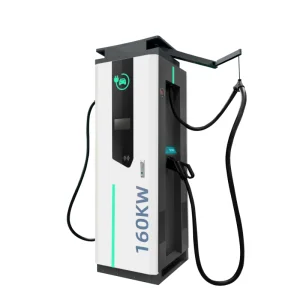
Engineered for high utilization and rugged environmental tolerance, featuring intelligent power routing, CCS2/GBT compliance, and multi-gun topologies.
Shenzhen Vernon Charger Co., Ltd. is a pioneering manufacturer specializing in portable, wall-mounted, and ground-mounted DC EV chargers, providing comprehensive solutions for smart group charging, fleets, and public applications. The company focuses on delivering efficient, reliable, and intelligent charging systems designed to meet the diverse needs of residential, commercial, and industrial customers.
Vernon Charger’s product portfolio includes high-power DC fast chargers, portable charging units, wall-mounted and ground-mounted stations, and flexible group charging solutions. Each product incorporates advanced features such as intelligent power management, real-time monitoring, remote control, and energy optimization, ensuring safe, efficient, and user-friendly operation across multiple scenarios.
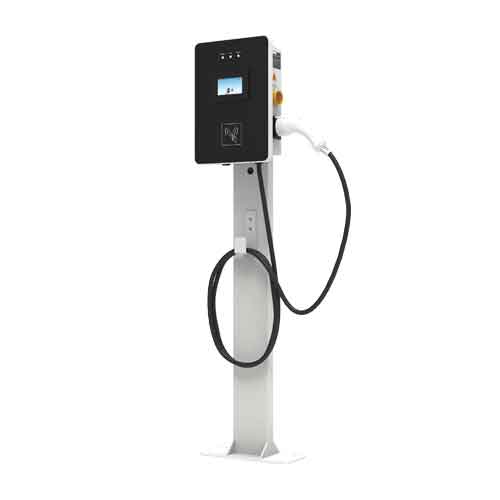
The company is committed to innovation and sustainability, integrating its DC charging systems with renewable energy sources and smart grid technologies. This enables optimized load balancing, reduced operational costs, and enhanced energy efficiency for fleet operators, public charging networks, and private users alike.
With rigorous adherence to international safety and quality standards, Shenzhen Vernon Charger Co., Ltd. has established itself as a trusted partner in the EV charging industry. By providing cutting-edge DC EV charging solutions, the company empowers clients to adopt cleaner transportation, improve operational efficiency, and contribute to a sustainable energy future.
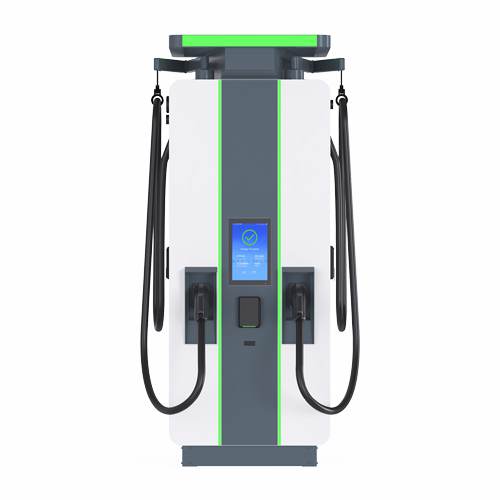
Comprehensive field execution architecture customized for utility constraints, harsh climates, and high-frequency turnaround fleets.
Depot turnaround requires uninterrupted high-amperage uptime. Vernon Charger deploys automated split-matrix systems capable of 240kW to 480kW dynamic sharing, enabling overnight balancing or rapid 15-minute battery top-offs without exceeding utility substation limits.
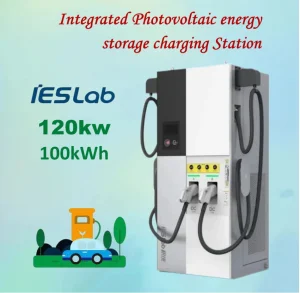
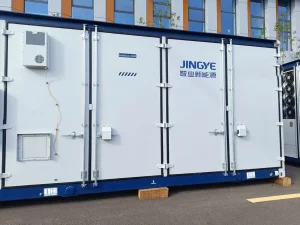
Integrating localized BESS (Battery Energy Storage Systems) and PV converters alleviates transmission congestion. Our hybrid DC-coupled units eliminate repeated AC/DC inversion cycles, boosting combined solar-to-battery charging throughput by 8%.
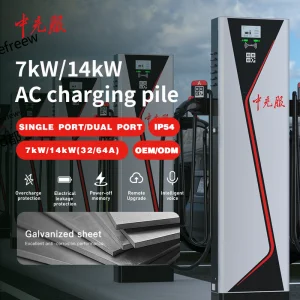
Compliant with OCPP 1.6J and 2.0.1, these stations enable Plug & Charge (ISO 15118), intuitive multi-lingual interfaces, integrated contactless POS billing, and intelligent dual-port load optimization for high-density public transport nodes.
Shenzhen's tier-one electronics ecosystem empowers Vernon Charger with rapid industrialization, localized lifecycle security, and superior cost-to-performance efficiency.
By leveraging wide-bandgap SiC power semiconductors within proprietary 30kW/40kW rectifiers, our systems achieve lower operational thermals, higher switching frequencies, and unmatched power densities up to 96.5% efficiency.
Direct component sourcing across critical sub-assemblies—ranging from liquid-cooling circulation systems to digital temperature modules—reduces lead times from prototype to batch delivery to under four weeks.
Every charging station undergoes automated thermal stress validation, high-potential dielectric breakdown insulation tests, full-load burn-in cycles, and full protocol handshaking tests before international container packing.
Continuous engineering initiatives directed towards grid interoperability, megawatt charging architectures, and bi-directional resilience.
Scaling beyond CCS limits to deliver Megawatt Charging Systems (MCS) exceeding 1.2MW, specifically built for heavy maritime, mining, and long-haul electric class-8 transport.
Standardizing IEEE 2030.5 and ISO 15118-20 protocols to transform parked fleet vehicles into virtual power plants (VPPs) providing active frequency control and load shaving to regional grids.
Miniaturizing cooling loops directly inside power conversion cabinets, ensuring low-noise footprint, operational stability at +55°C ambient, and continuous 500A-600A throughput without de-rating.
Deploying edge AI logic to monitor connector pin impedance, thermal rise gradients, and capacitor degradation, preventing hardware faults before operational downtime occurs.
Verified conformity backed by third-party testing labs ensures frictionless deployment in EU, Latin American, and Asia-Pacific markets.
Strict conformance with Low Voltage Directive (LVD 2014/35/EU), Electromagnetic Compatibility (EMC 2014/30/EU), and Radio Equipment Directive (RED), verified for IEC 61851-1 and IEC 61851-23/24 safety standards.
Integrated DC shunt sensors and certified billing modules compliant with Eichrecht and MID requirements ensure legal sub-metering and transparency for commercial retail parking environments.
24/7 level-3 diagnostic response, OTA automated firmware orchestration, readily available modular spare rectifiers, and factory-certified regional engineering training for field mechanics.
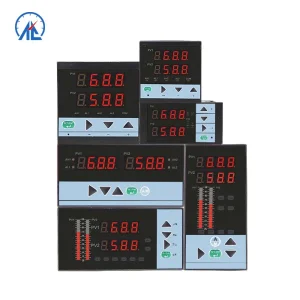
Complete product spectrum covering microgrid hybrid converters, temperature controllers, and scalable multi-port hubs.
Comprehensive engineering insights regarding DC charger procurement, protocols, and field integration.
Vernon Charger systems certified to CE standards comply directly with IEC 61851-21-2 EMC industrial requirements. They integrate Type 1 + Type 2 combined Surge Protective Devices (SPDs), galvanic isolation barriers, over-voltage/under-voltage tripping circuits, and high-frequency filtering that suppress transient spikes up to 6kV without system degradation.
Our solutions feature Matrix Dynamic Power Allocation. Power modules (30kW/40kW increments) are software-switched across guns in real time based on each vehicle's BMS state of charge (SoC). If one vehicle throttles charging near 80%, surplus current is instantly redirected to newly connected vehicles, maximizing overall depot power throughput.
Cabinets feature heavy-duty galvanized cold-rolled steel or marine-grade aluminum treated with anti-corrosion outdoor powder coatings (C4/C5 resistance classes). Internal electronics and power boards are triple-coated with silicone conformal coatings, isolated within IP54/IP55 air duct partitions to shield sensitive circuits from airborne salt and humidity.
Yes. Fully compliant with OCPP 1.6 JSON and OCPP 2.0.1, our systems interface directly with leading charge point operator (CPO) platforms, clearing houses, and fleet telemetry software. For microgrids, integrated Modbus TCP/RTU interfaces and dry contact inputs enable dynamic throttling according to solar production or battery storage limits.
 Vernon Charger