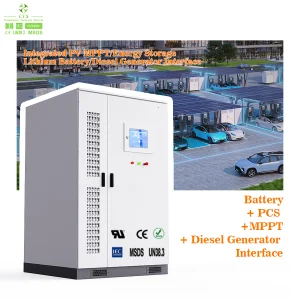
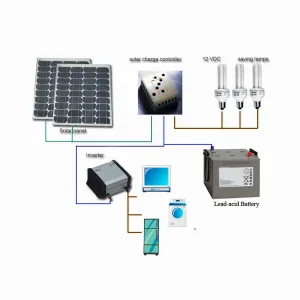
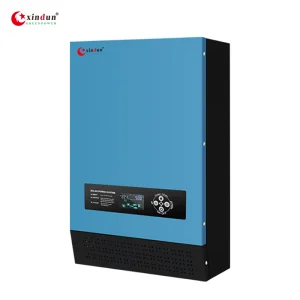
Advanced power conversion units designed for commercial fleets, industrial solar integration, and microgrid setups in Switzerland.

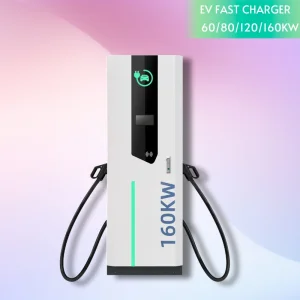
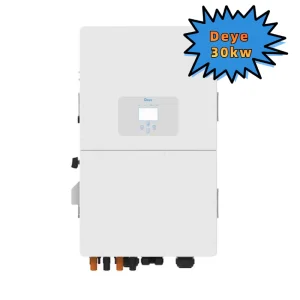
Shenzhen Vernon Charger Co., Ltd. is a pioneering manufacturer specializing in portable, wall-mounted, and ground-mounted DC EV chargers, providing comprehensive solutions for smart group charging, fleets, and public applications. The company focuses on delivering efficient, reliable, and intelligent charging systems designed to meet the diverse needs of residential, commercial, and industrial customers.
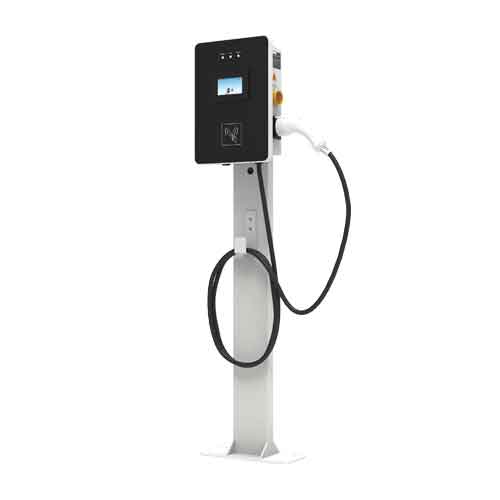
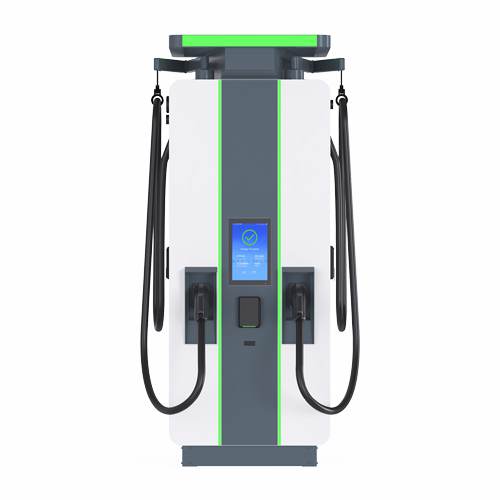
Vernon Charger’s product portfolio includes high-power DC fast chargers, portable charging units, wall-mounted and ground-mounted stations, and flexible group charging solutions. Each product incorporates advanced features such as intelligent power management, real-time monitoring, remote control, and energy optimization, ensuring safe, efficient, and user-friendly operation across multiple scenarios.
The company is committed to innovation and sustainability, integrating its DC charging systems with renewable energy sources and smart grid technologies. This enables optimized load balancing, reduced operational costs, and enhanced energy efficiency for fleet operators, public charging networks, and private users alike.
With rigorous adherence to international safety and quality standards, Shenzhen Vernon Charger Co., Ltd. has established itself as a trusted partner in the EV charging industry. By providing cutting-edge DC EV charging solutions, the company empowers clients to adopt cleaner transportation, improve operational efficiency, and contribute to a sustainable energy future.
How Switzerland’s premier chemical-pharmaceutical hub and border tri-national region is accelerating direct solar-to-DC mobility integration.
The Canton of Basel-Stadt has established one of Europe's most aggressive municipal climate targets: achieving net-zero greenhouse gas emissions by 2037. Situated at the border junction of Switzerland, Germany, and France, the Basel metropolitan region serves as a high-density logistical node. Industrial parks, chemical facilities (such as those in Schweizerhalle and Klybeck), and trimodal ports (Schweizerische Rheinhäfen) face mounting regulatory pressure to phase out internal combustion engine (ICE) transport fleets.
To support this transition, commercial building owners and industrial factory operators across Basel are rapidly mounting rooftop Solar Photovoltaic (PV) arrays. However, converting high-yield intermittent solar energy into fast-charging power for heavy-duty commercial EVs creates acute grid congestion issues under local grid operator (IWB - Industrielle Werke Basel) distribution rules.
Eliminating multi-stage DC-AC-DC conversion losses for maximum energy yield and reduced CAPEX/OPEX.
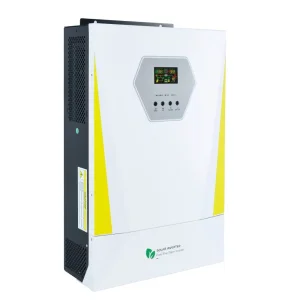
Connects rooftop PV MPPT trackers, LiFePO4 energy storage arrays, and fast DC charging stations directly onto a common high-voltage DC bus (750V–1000V DC). This architecture bypasses multiple AC inverter stages, capturing up to 7% higher net efficiency than conventional AC-coupled setups.
Utilizes advanced dynamic load balancing (DLM) algorithms to buffer sudden high-power EV charging spikes using localized LiFePO4 batteries. This keeps grid draw below contracted limits with IWB, eliminating financial penalties for demand surges.
Equipped with ultra-fast solid-state transfer switches capable of islanding the industrial facility within <15 milliseconds during grid blackouts or voltage sags, ensuring continuous operation for critical pharmaceutical cold-chain fleets.
| Performance Metric | Conventional AC-Coupled Charging System | Next-Gen Direct DC-Coupled Microgrid System |
|---|---|---|
| Overall PV-to-EV Efficiency | 86.5% – 89.0% (Multiple AC/DC conversion losses) | 95.8% – 98.2% (Direct DC-to-DC MPPT Transfer) |
| Grid Transformer Bottleneck | Requires full capacity expansion for peak load | Zero grid expansion required (Buffered by Battery Energy Storage) |
| Response Time for Load Balance | 1.5s – 5.0s (Software mediated AC throttling) | < 15 milliseconds (Hardware-level DC bus control) |
| System Footprint & Weight | Bulky due to separate PV inverters & AC EVSE chargers | 35% footprint reduction (Unified Power Cabinet Architecture) |
| V2G / Bi-directional Capability | Complex dual-inverter synchronization needed | Native ISO 15118-20 Bi-directional DC Transfer |
Bridging worldwide manufacturing capabilities with stringent Swiss electrical engineering standards.
Globally, logistics fleets are transitioning from 400V battery architectures to 800V and 1000V platforms (e.g., Porsche Taycan, Hyundai E-GMP, Tesla Semi, Volvo Heavy Trucks). Standard AC charging (11kW to 22kW) is inadequate for fast turnaround times required in modern supply chains. High-power DC fast charging (60kW to 360kW+) has become mandatory for commercial depots.
Concurrently, solar panel manufacturers are releasing high-efficiency N-Type TOPCon and Heterojunction (HJT) modules with nominal outputs exceeding 650W. Integrating these solar arrays directly with high-voltage DC chargers eliminates redundant AC conversion steps, creating an optimal industrial ecosystem.
Deploying energy infrastructure in the Basel region requires strict adherence to Swiss federal statutes and regional grid operator guidelines:
Engineered for high-volume commercial, industrial, and municipal infrastructure across the Rhine region.
Location Focus: Klybeck, Rosental, Schweizerhalle logistics parks.
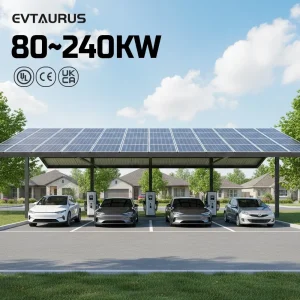
Designed for 24/7 temperature-sensitive pharmaceutical transport vehicles. Solar PV canopies generate clean energy while direct DC fast chargers keep cold-chain electric vans rapidly charged without grid transformer stress.
Location Focus: Kleinhüningen, Birsfelden, Muttenz ports.
High-power 240kW to 360kW DC charger stations coupled with large warehouse solar roofs to supply heavy commercial trucks and yard tractors during cargo loading and unloading operations.
Location Focus: Saint-Louis / EuroAirport Tri-Border Hub.
Multi-megawatt rooftop PV integration with centralized DC power cabinets, enabling dynamic distribution of charging power across hundreds of employee and delivery fleet vehicles.
Ensuring long-term capital investment protection through scalable, future-proof microgrid engineering.
Transitioning from traditional Silicon IGBTs to 3rd-generation SiC power modules. This achieves ultra-high power density, decreases thermal dissipation by 40%, and yields overall power module conversion efficiencies of > 99%.
Full implementation of international bi-directional charging protocols. Commercial EV fleets parked overnight serve as distributed virtual power plants (VPPs), supplying energy back to the industrial factory or grid during high-cost peak tariff hours.
Integrating cloud-based machine learning algorithms that evaluate historical Basel solar irradiation data, real-time electricity spot prices (EPEX SPOT), and vehicle arrival patterns to optimize energy storage charge/discharge cycles automatically.
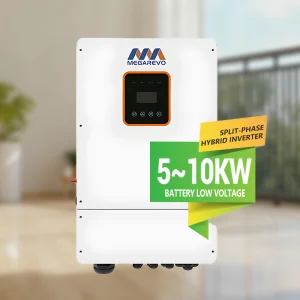
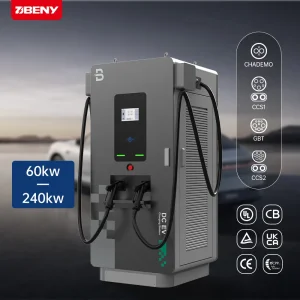
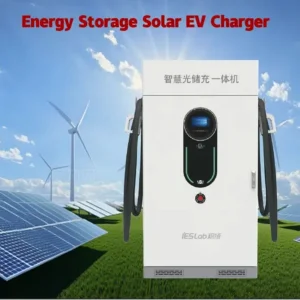
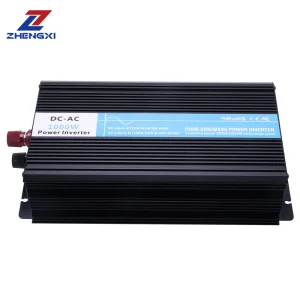
Explore our full range of certified industrial power solutions engineered for global export and local integration in Switzerland.
In-depth engineering insights for factory managers, EPC contractors, and microgrid developers in Switzerland.
Direct DC coupling connects solar PV panels, energy storage batteries (BESS), and fast EV chargers on a single high-voltage DC bus. This eliminates multiple AC-to-DC and DC-to-AC conversion steps, yielding a 5% to 8% efficiency increase. More importantly for Basel C&I users, it allows high-power DC fast charging directly from solar arrays and batteries without triggering costly distribution grid upgrades required by local grid operators like IWB.
Our complete line of DC EV chargers and integrated power systems complies strictly with IEC/EN 61851-1, IEC/EN 61851-23, and IEC/EN 61851-24 standards. For Swiss market compliance under ESTI (Federal Inspectorate for Heavy Current Installations) regulations, our systems incorporate advanced ground fault detection, ultra-fast DC isolation circuit breakers, surge protection devices (Type 1+2), and IP54/IP65 ingress protection rated enclosures.
Yes. Our high-voltage hybrid systems feature islanding capabilities. In the event of a grid outage or voltage instability on the local utility network, the system automatically transitions into off-grid island mode in less than 15 milliseconds. This guarantees uninterrupted charging for critical logistics fleets and continuous factory operations.
All commercial DC fast chargers manufactured by Shenzhen Vernon Charger support open standards, including OCPP 1.6J and OCPP 2.0.1 via Ethernet, Wi-Fi, or 4G LTE connection. They also natively support ISO 15118-2 for Plug & Charge authentication and are prepared for ISO 15118-20 bi-directional energy transfer (V2G/V2X).
Depending on local solar irradiance, daytime power tariff rates, and fleet utilization frequency, commercial facilities in the Basel area typically achieve full payback on direct DC PV-EV integrated infrastructure within 3.5 to 5.5 years. ROI is significantly accelerated by eliminating peak demand surcharges and avoiding grid transformer upgrades.
Partner with Shenzhen Vernon Charger Co., Ltd. for engineering-grade DC charging integration, OEM/ODM solutions, and direct solar PV microgrid hardware built for global performance.
Send Inquiry Now Vernon Charger